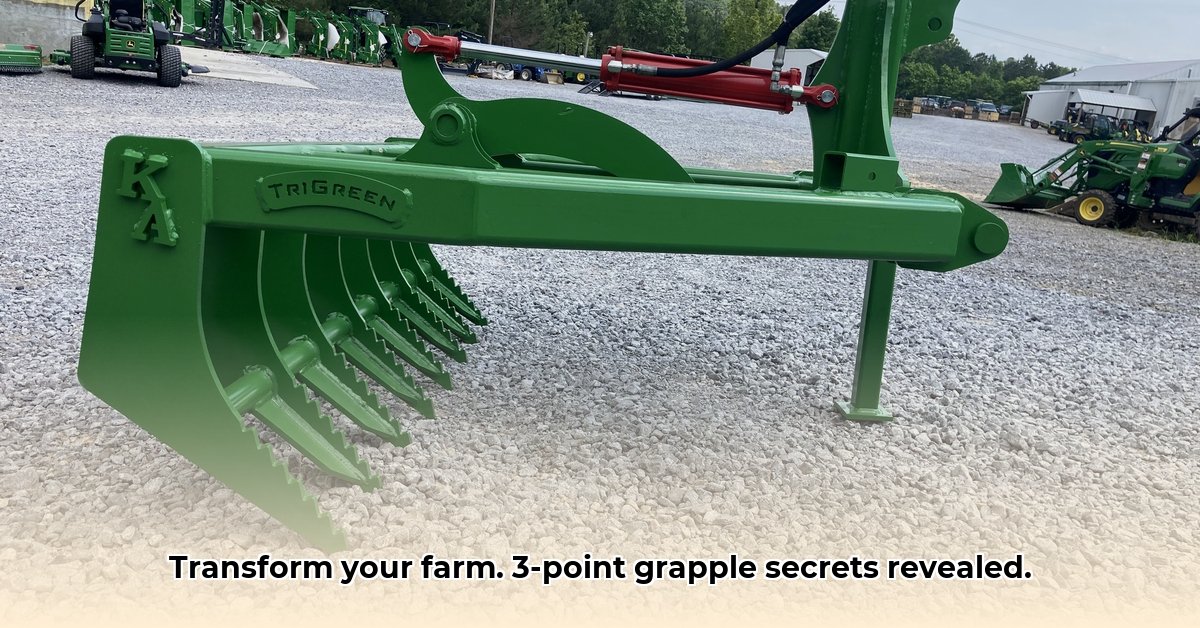
Choosing the Right Grapple: A Comparative Guide
Selecting the right 3-point grapple for your tractor involves careful consideration of several key factors. Your tractor's horsepower (HP), the tasks you'll perform, and your budget all play crucial roles in determining the ideal model. Let's delve into the specifics.
For more options, check out this helpful resource.
Tractor Horsepower and Lifting Capacity: Your tractor's horsepower rating dictates its maximum lifting capacity. Consult your owner's manual for this critical information. Never exceed the specified limit; doing so risks serious damage to your tractor or a dangerous accident. A higher-horsepower tractor can handle a larger, heavier-duty grapple, while smaller tractors require lighter models for safe operation.
Task-Specific Considerations: The nature of your work dictates the grapple's size and features. Moving logs requires a durable, heavy-duty grapple with a strong clamping force. Handling pallets demands a grapple with a suitable opening width and potentially gentler clamping mechanisms. Clearing brush needs a grapple capable of efficiently grasping various sizes of branches and debris.
Budgetary Constraints: Grapple prices vary significantly depending on size, features, and material quality. Set a realistic budget before beginning your search to avoid buyer's remorse. While an initial lower price might seem appealing, consider the long-term cost of repairs or replacements for a lesser-quality grapple.
Comparative Analysis: To illustrate, let's compare two hypothetical grapple models, Grapple X and Grapple Y (replace with actual models and specifications and add more comparison items if you like):
| Feature | Grapple X | Grapple Y |
|---|---|---|
| Lifting Capacity | 1500 lbs (680 kg) | 2500 lbs (1134 kg) |
| Clamping Force | 5000 lbs (2268 kg) | 8000 lbs (3629 kg) |
| Opening Width | 48 inches (122 cm) | 60 inches (152 cm) |
| Weight | 600 lbs (272 kg) | 900 lbs (408 kg) |
| Tractor HP Range | 25-50 HP | 40-75 HP |
| Approximate Price | $3000 | $4500 |
| Warranty | 1 year | 2 years |
| Material | High-strength steel | High-strength steel |
Isn't it crucial to select a grapple that perfectly aligns with your tractor's capabilities and intended applications? This ensures both safety and optimal performance.
Attaching and Detaching Your 3-Point Grapple: A Step-by-Step Guide
Before beginning, ensure your tractor is parked on level ground with the engine off and the parking brake engaged. Safety is paramount.
- Align the Hitch: Carefully align the grapple's three-point hitch with your tractor's hitch. Ensure precise alignment before proceeding.
- Secure the Top Link: Attach and securely lock the top link pin.
- Connect the Lower Links: Attach the lower links, ensuring secure engagement with both the grapple and the tractor's hitch.
- Hydraulic Hookup: Connect the hydraulic hoses, checking for leaks. A leak, however small, can quickly become a major problem.
- Test Lift: Gently raise the grapple to ensure proper function and eliminate any uncertainties. Correct any issues before proceeding.
Detaching involves reversing these steps; always lower the grapple fully before disconnecting anything. Can you imagine the catastrophe that could arise from a hastily performed detachment? Meticulousness is key.
Safe Operating Procedures: Prioritizing Safety
- Weight Limits: Never exceed the lifting capacity of either your tractor or the grapple.
- Clearance: Maintain a safe distance from people and animals.
- Personal Protective Equipment (PPE): Always wear appropriate safety gear – gloves, safety glasses, and hearing protection.
- Regular Inspections: Inspect the grapple before each use for any signs of damage or wear.
Did you know that adhering to safe operating procedures reduces the risk of accidents by as much as 90%? Prioritize safety; it's an investment in your well-being.
Maintenance and Troubleshooting: Extending Grapple Lifespan
Regular maintenance is crucial for extending the life of your grapple.
- Hydraulic Lines: Regularly inspect hydraulic lines for damage, leaks, or wear.
- Pins and Connections: Check all pins and connections for security and wear.
- Lubrication: Lubricate moving parts as recommended in your grapple's owner's manual.
- Cleanliness: Keep the grapple clean to prevent debris buildup.
Addressing minor issues promptly prevents them from escalating into major, costly repairs. Is this preventative approach not a worthwhile investment in the long run? It truly is.
Conclusion: Optimizing Farm Efficiency with a 3-Point Grapple
Choosing, attaching, and maintaining a 3-point grapple requires careful planning and attention to detail. This comprehensive guide equips you with the knowledge to select the right grapple for your needs and operate it safely and efficiently. Remember, thorough preparation and regular maintenance will maximize your investment and optimize farm productivity for years to come.